
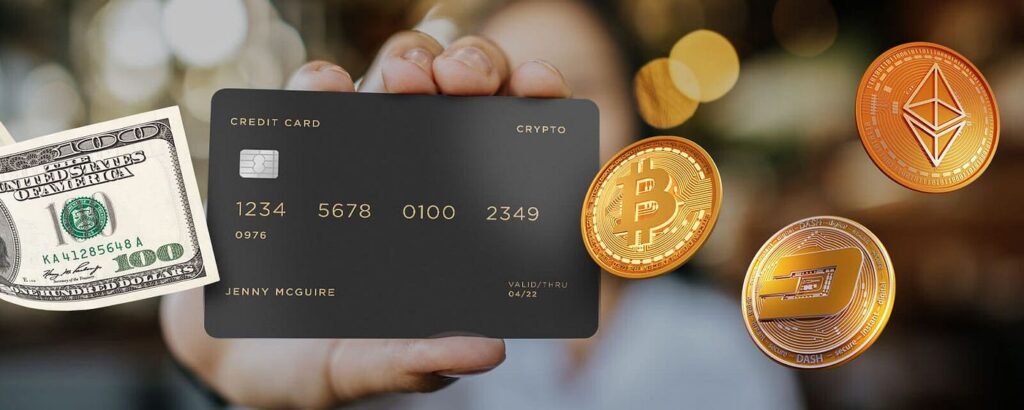
Crypto is very good at moving money between wallets. It is still not especially good at buying lunch.
That sounds strange after more than a decade of cryptocurrency adoption, but it remains true. Someone can receive USDT from a client on the other side of the world in minutes, then discover that the restaurant downstairs only takes cards and mobile payments.
The merchant does not care whether the customer owns Bitcoin. It wants a payment it already knows how to process.
Crypto cards have become one answer to that problem. They sit between a crypto balance and the card networks merchants already use. Add mobile-wallet support and the result is even more practical: crypto can indirectly fund purchases made through Apple Pay or Google Pay without the store itself having to accept cryptocurrency.
For people who earn, save or trade in crypto, that changes what a digital asset balance can actually be used for.
Why direct crypto payments never became the default
There are businesses that accept Bitcoin and stablecoins directly. They are still the exception.
Adding direct crypto checkout creates work for a merchant. It has to decide which coins and networks to support, deal with wallet infrastructure, handle refunds and think about accounting. Crypto users then have another problem: one store accepts USDT on TRON, another takes Bitcoin, and the next one accepts no crypto at all.
Cards already solved the merchant side of this problem decades ago.
That is why the more practical model is often to change the payment method on the customer side instead of convincing every merchant to change its checkout.
A crypto card does exactly that.
The user funds the card from digital assets. The store receives an ordinary card transaction. From the cashier’s point of view, there may be no meaningful difference between that purchase and one made with a conventional debit card.
What actually happens when you spend crypto with a card
The phrase “pay with crypto” can be slightly misleading.
If you walk into a café and tap a crypto-funded card through Apple Pay, the café normally is not receiving USDT or Bitcoin. It receives payment through the card network in the currency supported by its payment system.
The crypto conversion happens elsewhere in the chain.
The exact setup varies by provider. A service may convert crypto when the user funds the card, maintain a fiat-denominated card balance, or handle conversion as part of the spending process.
The useful part for the customer is that none of this requires the merchant to integrate a blockchain.
A service such as IZIPAY follows this general model: users can fund card spending from supported cryptocurrencies and then use normal card infrastructure for eligible purchases.
That is much closer to how people already pay.
Apple Pay and Google Pay make the model more useful
A virtual card on its own is mainly an online tool. You can use its number, expiration date and security code at a website checkout.
Put that same supported card into Apple Wallet or Google Wallet and its usefulness expands beyond the browser.
Apple Pay can be used at compatible contactless terminals, as well as in supported apps and websites. Google Wallet follows a similar model on compatible Android devices. In both cases, the card itself has to be eligible for the wallet and the service must be available in the user’s country.
Once those conditions are met, the payment experience is ordinary.
You unlock the phone and tap.
That matters more than it sounds. One of the biggest barriers to spending crypto has always been that paying with it feels different from paying with everything else. Mobile wallets remove much of that difference.
The user can keep part of their money in crypto while interacting with stores through payment technology that cashiers already understand.
What can you actually pay for?
The obvious use case is everyday shopping.
A compatible card in Apple Pay or Google Pay can be useful at supermarkets, cafés, restaurants and other merchants with supported contactless terminals. For someone who receives part of their income in stablecoins, this creates a fairly direct route from crypto earnings to routine spending.
The online side is just as important.
Most major internet services still expect cards. Think about the stack of subscriptions a freelancer or small company can accumulate: AI tools, cloud hosting, domains, software, design products, streaming, travel sites and advertising platforms.
Almost none of those businesses need to accept crypto directly if the customer has a working crypto-funded card.
This has become particularly useful with AI. Developers and marketers may hold USDT while paying for several AI products every month. Moving $20 or $50 at a time through an exchange and then withdrawing it to a bank simply to renew another software subscription is a lot of friction for a small transaction.
A virtual card turns it into a normal subscription payment.
Paying for advertising from crypto revenue
Advertising is a less obvious use case, but it makes sense for businesses that operate online.
A performance marketer might be paid in USDT and spend much of that revenue again on customer acquisition. A Web3 company may keep part of its treasury in stablecoins while paying for ads on conventional platforms.
Without a card, the flow can become:
USDT → exchange → fiat conversion → bank withdrawal → bank card → advertising platform.
With a crypto-funded card, several of those steps disappear.
It is not only about speed. A separate card for advertising can also make budgeting easier. Instead of mixing paid media, SaaS subscriptions and personal spending on the same bank card, a business can maintain a defined balance specifically for marketing expenses.
The card does not change the advertising platform’s rules. It simply gives a crypto-funded business another way to use an ordinary card checkout.
Why stablecoins are particularly well suited to this
Bitcoin can fund spending, but stablecoins make everyday budgeting easier.
If a company has $5,000 set aside for operating expenses, holding that budget in USDT or USDC makes the number relatively straightforward to follow. A budget held entirely in BTC may be worth noticeably more or less before the next invoice arrives.
That does not make stablecoins better investments. They serve a different purpose.
A useful way to think about it is to separate investment assets from spending assets.
Someone might keep BTC as a long-term position while using USDT for this month’s subscriptions, travel and daily purchases. A crypto card then becomes the bridge from the spending balance to merchants.
That distinction becomes particularly useful when the card is linked to a mobile wallet. The user does not have to think about the blockchain every time they pay. The crypto side is dealt with before the transaction reaches the merchant.
Travel may be the strongest use case
Crypto users tend to be disproportionately international. Freelancers work for overseas clients. Remote employees change countries. Traders and founders travel for conferences. Digital nomads may not have a strong relationship with any single banking system.
Travel exposes the weakness of relying only on a crypto wallet.
You may have plenty of money in USDT and still need a conventional payment method to book a room, buy a train ticket or pay at a restaurant.
A virtual crypto debit card that supports Apple Pay or Google Pay can make that balance more useful while travelling. It can be used for eligible online bookings before the trip and, once added to a supported mobile wallet, for compatible contactless purchases on the ground.
There are still limitations.
Hotels sometimes require a physical card for deposits. Car rental companies can have stricter card policies. Mobile-wallet and card acceptance differs by country. A virtual card should therefore be one part of a travel payment setup rather than the only payment method someone carries.
But for normal spending, the ability to move from USDT to a phone-based payment is useful precisely because the merchant does not need to know anything about crypto.
The wallet also changes the security model
Mobile wallets do more than save users from typing card numbers.
Apple Pay and Google Wallet use tokenized payment credentials rather than simply handing the merchant the underlying card number during a contactless transaction.
That reduces the amount of card information exposed at the point of sale.
It also means losing access to the underlying crypto wallet is a different problem from paying at a merchant. The merchant is interacting with the mobile-wallet/card system, not with the user’s blockchain wallet or private keys.
This separation is useful.
There is little reason for a coffee shop, hotel or online subscription service to know which blockchain the customer used to fund a card. The merchant only needs a valid payment.
It is not a universal workaround
Crypto cards are useful, but they are still cards.
A merchant can reject a virtual or prepaid card. Some businesses require cards issued in a particular country. Subscription platforms may compare the billing address, account country and IP location. Hotels and rental companies may place larger authorization holds.
Apple Pay and Google Pay also have their own eligibility rules. Adding a card successfully depends on support from the issuer, the mobile wallet and the country where the service is being used.
Users should therefore treat a crypto card like a normal financial product rather than a magic pass through every checkout.
Billing information should be accurate. Enough balance should be available for taxes or temporary authorizations. Repeatedly retrying a declined transaction rarely improves the situation.
The more ordinary the payment setup looks, the better.
Why this matters for crypto adoption
For years, crypto adoption was often measured by the number of merchants willing to put a Bitcoin logo on their checkout page.
That may have been the wrong metric.
Consumers do not necessarily need every merchant to become a crypto merchant. They need an easy way to use the value they already hold.
Cards and mobile wallets can provide that translation layer.
A programmer gets paid in USDT. Part of it stays in crypto. Another part funds a card. The programmer uses that card to renew an AI subscription online, pays for lunch with a phone and books a hotel for an upcoming trip.
None of those merchants needed to build a crypto payment system.
That may be a less dramatic version of adoption than paying for groceries directly from a blockchain address. It is also far closer to how people behave in the real world.
The interesting part of crypto card technology is not the card itself. It is that the technology makes crypto less visible at the moment of purchase.
For everyday payments, that is probably a feature.

